
Osteoarthritis (OA), also known as osteoarthrosis or degenerative joint disease, is the most common type of arthritis. OA is a chronic, debilitating condition characterized by the degeneration and loss of joint cartilage, resulting in damage to the opposing bones and subsequent bone overgrowth or “remodeling”.
These changes eventually lead to joint pain and inflammation, accompanied by tenderness, stiffness, and limitation or loss of movement. Most individuals with OA initially seek medical treatment for intractable pain.
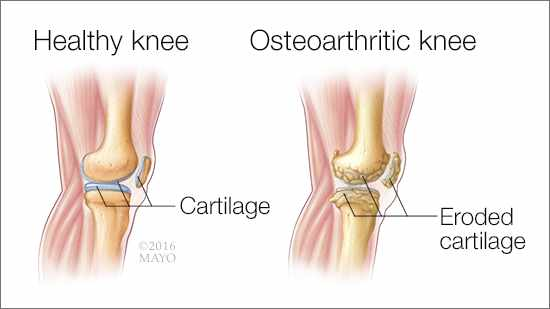
Comparison of a healthy knee joint with a joint affected by severe osteoarthritis (OA) .
OA has a gradual onset, and symptoms usually donÂ’t appear until around the age of 45 to 50 years. The diseas affects 35% of adults age 65 or older.
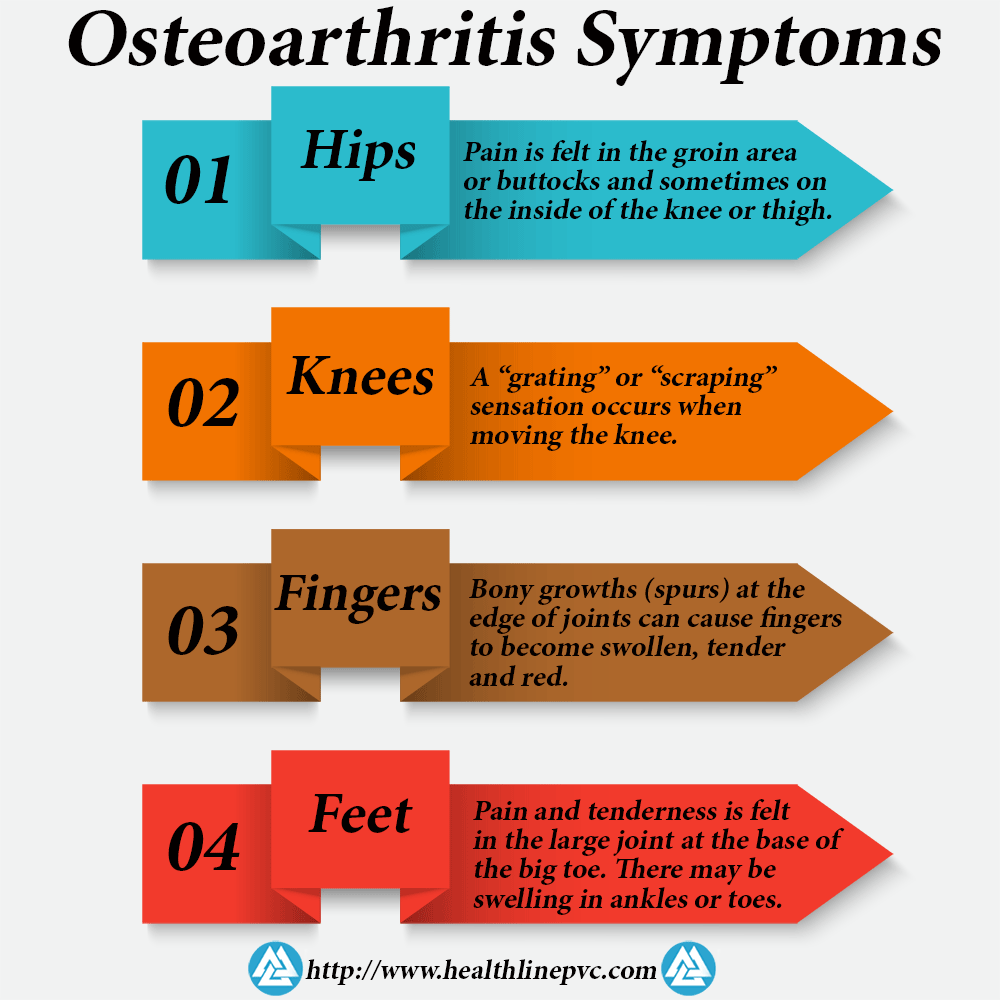
The precise cause or causes of OA are unknown. The development and progression of the disease, however, are influenced by both local mechanical and systemic risk factors. Local risk factors include obesity, joint injury, joint deformity, and extensive participation in certain sports, such as baseball, boxing, and cycling. Systemic risk factors include age, gender, bone density, estrogen deficiency, and a genetic predisposition to OA. Certain risk factors, such as aging and genetic predisposition, increase joint vulnerability to the development of OA, while other factors, such as obesity and physical activities, cause excessive joint loading.
OA is primarily affecting the knees (33% prevalence), hands (30%), feet (21%), and hips (5%). The spine (i.e., neck and lower back) may also be involved.
OA usually begins with damage to articular cartilage. Cartilage has four major components: water, chondrocytes, collagen, and proteoglycans. Cartilage is mainly composed of water (65% to 85%). Chondrocytes, the only cells in cartilage, make up 2% to 5% of cartilage tissue. Five types of collagen are found in cartilage, with type II being the most prominent. Collagen consists of fibrous proteins, which provide the “building blocks” of skin, tendons, bones, and other connecti tissues. In cartilage, a mesh-like network is formed when collagen interweaves with proteoglycans (combinations of proteins and sugars). This mesh allows the joint to flex and to absorb physical shock.
In OA, the slow depletion of collagen and proteoglycans in cartilage ultimately leads to destruction (catabolism) of the collagen network.
Natural supplements and Osteoarthritis
Collagen
Collagen hydrolysate has a positive therapeutic role in osteoporosis and osteoarthritis: potentially increasing bone mineral density, having a protective effect on articular cartilage and, primarily, providing symptomatic relief of pain. Although there is no consensus in the scientific literature searched on the collagen hydrolysate dosage to be administered, it was noted that with a daily supplementation of 8g there was an increase in glycine and proline concentration in plasma. Also, daily doses equivalent to 12g promoted a significant improvement in the symptoms of osteoarthritis and osteoporosis.
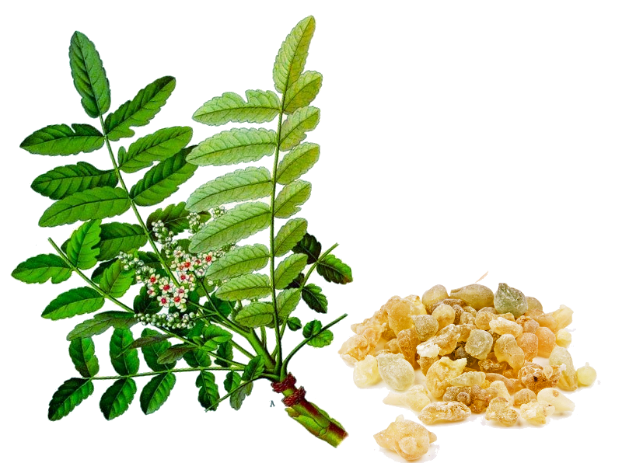
Boswellia:
Current research proves that Boswellia serrata possesses pharmacological properties like anti-arthritic, anti-inflammatory, analgesic, hepatoprotective etc. and this could offer relief in osteoarthritis.
Boswellia serrata is used to treat diarrhoea, dysentery, ringworm, boils, fevers (antipyretic), skin and blood diseases, cardiovascular diseases, mouth sores, bad throat, bronchitis, asthma, cough, vaginal discharges, hair-loss, jaundice, hemorrhoids, syphilitic diseases, irregular menses and stimulation of liver.
Turmeric
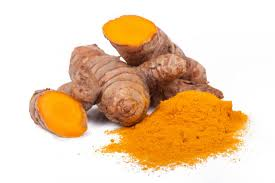
Turmeric as well as curcumin are natural anti-inflammatory agents. CurcuminÂ’ anti-inflammatory property helps curb the production of inflammatory cytokines in osteoarthritis, suppresses the metabolic activity of chondrocytes (bone cells) andprevents degradationof cartilage.
Curcumin inhibits the activity of protein nuclear factor-kappa B, the key player in inflammatory process and inhibits the production of inflammatory agents such as interleukin-1beta and tumor necrosis factor-alpha thus preventing the progression of osteoarthritis.
DevilÂ’ Claw
In various studies, devilÂ’s claw has been reported to show anti-inflammatory a nd anti-analgesic 8properties which is due to the presence of iridoid glycosides andharpagosidein plant extract.
1- www.ncbi.nlm.nih.gov/pmc/articles/PMC4103717/#b1-ptj3906436
2- www.oarsijournal.com/article/S1063-4584(16)00389-7/abstract
3-www.naturalarthritistreatments.net/osteoarthritis
Keywords: arthritis, osteoarthritis, pain, inflammation, natural supplements, naturopathy, turmeric, collagen,boswellia, Devil's claw